How to Choose a Ceramic Coating Shop in Scottsdale
Scottsdale has dozens of shops offering ceramic coating. Here's what 6+ years in the business taught me about separating quality work from expensive mistakes.
The Hard Truth About Choosing a Ceramic Coating Shop
Choosing a ceramic coating shop in Scottsdale is one of the most important decisions you'll make for your vehicle. With so many options—from mobile detailers to high-end shops—how do you know who to trust? Learn about red flags to avoid and the 15 questions you should ask before booking.
Start with Certifications and Training
Legitimate ceramic coating manufacturers don't sell to just anyone. System X, Gtechniq, Ceramic Pro, and other professional-grade products require installer certification through manufacturer training programs.
What Manufacturer Certification Actually Means
Certified installers have: Completed hands-on product training. Demonstrated proper application technique. Met facility standards for climate control and cleanliness. Agreed to quality standards and warranty requirements. Maintained ongoing education on product updates. This certification isn't just a certificate on the wall—it's the manufacturer's confirmation that the shop meets their standards for applying their product correctly.
How to Verify Certifications
Don't just take their word for it: Ask which specific coating brands they're certified for. Request to see current certification documents (they should display them). Look for the shop on the manufacturer's certified installer locator. Check certification dates—some shops let certifications lapse. If a shop claims to use 'professional ceramic coating' but won't specify the brand or show certifications, that's your cue to leave.
Inspect the Facility Before You Commit
The shop's physical facility tells you more than their marketing materials ever will. Ceramic coating requires specific environmental conditions that can't be faked.
Climate Control Requirements
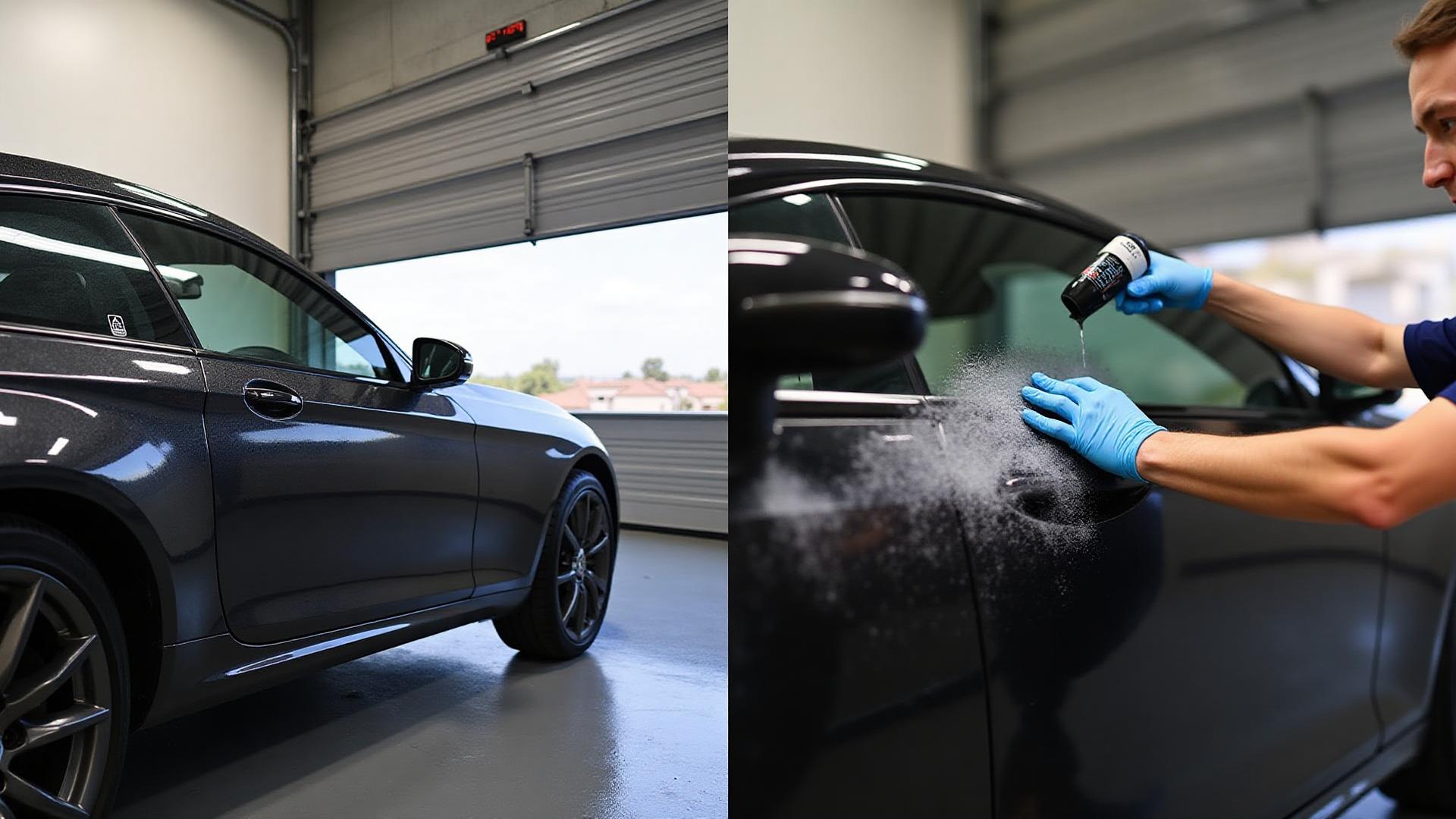
Professional ceramic coating application demands: Controlled temperature (60-75°F). Managed humidity (below 60%). No temperature fluctuations during cure. Arizona's extreme heat makes this critical. Coating applied in 100°F+ heat flashes too quickly, preventing proper bonding. Coating applied in uncontrolled humidity develops hazing or uneven curing. Ask to see the application bay. If it's not climate-controlled with visible HVAC, they're not applying coating in proper conditions—period.
Cleanliness and Dust Control
Ceramic coating bonds at the molecular level. Any contamination—dust, dirt, debris—gets locked under the coating permanently. Quality shops maintain: Sealed application bays. Air filtration systems. Regular cleaning protocols. Dedicated coating application areas separate from mechanical work. Walk through the facility. If you see dust, dirt, or general messiness, that contamination will end up in your coating.
Lighting for Proper Inspection
Paint correction and coating application require seeing surface defects clearly. Quality shops use: High-intensity LED work lights. Portable inspection lights. Different light angles for various defect types. Shops working in dim garages or relying on overhead fluorescents can't properly inspect paint. Defects they miss get coated over.
Evaluate Their Paint Correction Capabilities
Ceramic coating is only as good as the surface underneath. Shops that skip or rush paint correction deliver poor results regardless of coating quality.
Equipment and Tools
Professional paint correction requires: Multiple polishers (dual-action and rotary). Various pad types for different correction stages. Professional-grade compounds and polishes. Paint thickness gauge for measuring clear coat. Quality shops invest thousands in equipment. If they're using consumer-grade Amazon polishers, expect consumer-grade results.
Process Understanding
Ask how they approach paint correction: Do they measure paint thickness before polishing? What determines if 1-step, 2-step, or 3-step correction is needed? How do they handle edges and body lines to avoid burn-through? What compounds and pads do they use for each stage? Detailed, specific answers indicate real expertise. Vague responses or 'we just polish until it looks good' reveal amateur hour.
Before and After Documentation
Quality shops document their correction work: Photos before, during, and after correction. Paint thickness measurements logged. Defect severity assessment. Customer review of results before coating. This documentation protects both you and them. It proves the work was done and shows exactly what was corrected.
Look for Transparent Pricing and Process
How a shop presents pricing and explains their process reveals their professionalism and honesty.
Detailed Written Quotes
Professional shops provide quotes that specify: Exact coating product and warranty duration. Paint correction level (1-step, 2-step, etc.). All included prep work (wash, clay bar, decontamination). Additional services (wheels, glass, trim). Total timeline from drop-off to pickup. Warranty terms and maintenance requirements. Vague quotes like 'ceramic coating package - $999' tell you nothing about what you're actually getting.
In-Person Vehicle Assessment
Legitimate shops inspect your vehicle before quoting: They'll look at paint condition under proper lighting. Discuss visible defects and correction needs. Measure paint thickness if necessary. Explain what correction level they recommend and why. Shops quoting over the phone or from photos without seeing your vehicle are guessing. That guess often becomes 'we need to charge more' after you've already committed.
Realistic Timelines
Quality ceramic coating takes time: Decontamination and prep: 2-4 hours. Paint correction: 4-12 hours depending on condition. Coating application: 2-4 hours. Initial cure time: 12-24 hours minimum. Anyone promising same-day or next-day completion is rushing critical steps. You'll get subpar results that fail prematurely.
Check Reviews, But Know What to Look For
Online reviews matter, but you need to read them correctly. Not all 5-star reviews are created equal.
At Upscale Detailz in Scottsdale, we welcome these questions because we have nothing to hide. We use System X ceramic coating, include multi-stage paint correction, provide written quotes and warranties, and back our work with 6+ years of experience. Check our transparent pricing or explore our complete ceramic coating guide.
Red Flags in Reviews
Watch for these warning signs: All reviews posted in short time periods (bought/fake reviews). Generic language ('great job, very professional'). No specific details about services received. Photos that don't show actual work. Overwhelming focus on price over quality. Negative reviews mentioning coating failure, hazing, or streaking within months. These patterns suggest problems hidden beneath surface-level praise.
What Legitimate Reviews Look Like
Quality reviews contain: Specific coating product mentioned. Timeline from drop-off to pickup. Before/after photos (ideally multiple angles). Details about communication and process. Long-term follow-ups ('6 months later and still perfect'). Specific examples of why they're satisfied. Real reviews discuss both process and results in detail. Surface-level praise suggests either fake reviews or customers who can't evaluate quality work.
Look for Long-Term Feedback
Ceramic coating quality reveals itself over time. Look for: Reviews mentioning coating performance after 6+ months. Customers who've returned for second vehicles. Multi-year customer relationships. Follow-up reviews discussing durability. A shop with mostly fresh reviews might deliver initially impressive results that don't last.
Ask These Specific Questions
When consulting with ceramic coating shops, these questions separate professionals from amateurs.
About the Coating Product
What specific ceramic coating brand and product line do you use? (They should name System X, Gtechniq, Ceramic Pro, etc.). What warranty duration does this coating carry? (Should match manufacturer specs). What makes this coating better than others? (Should discuss specific performance characteristics). Do you offer different coating tiers? (Most manufacturers have multiple product levels). Can I see the product specifications? (Legitimate products have technical data sheets).
About Paint Correction
How do you determine what correction level my vehicle needs? (Should mention inspection, paint thickness measurement). What tools and products do you use for correction? (Should name specific polishers, compounds). How long does correction take for each level? (Should give realistic time estimates). Do you measure paint thickness before and after? (Professional shops always do). Can I approve the correction results before coating? (You should always see results first).
About the Process
Is your facility climate-controlled? (Must be yes). How long will the entire process take? (Should be 1-3 days minimum). What prep work is included? (Should detail wash, clay, decontamination). How long should I wait before washing after application? (Usually 7-14 days). What maintenance is required to maintain the warranty? (Should have specific care instructions).
About Experience and Training
How long have you been applying ceramic coating? (Experience matters). What certifications do your technicians hold? (Should show manufacturer certifications). How many vehicles do you coat monthly? (Establishes experience level). Can you show examples of your work? (Should have portfolio). Do you specialize in any particular vehicle types? (Some shops focus on luxury, exotics, etc.).
Understand the Warranty and What It Covers
Warranty terms separate quality shops from those planning to disappear. Read the fine print carefully.
Manufacturer vs Installer Warranty
Professional ceramic coatings include: Manufacturer product warranty (covering coating defects). Installer application warranty (covering installation errors). Both should be included. If a shop only offers their own warranty without manufacturer backing, they're likely using consumer products.
What Warranty Actually Covers
Read warranty terms carefully. Legitimate warranties cover: Coating delamination or peeling. Product failure due to manufacturing defect. Application errors (improper bonding, hazing, streaking). They DON'T cover: Damage from improper maintenance. Rock chips, scratches, or physical damage. Coating degradation from using harsh chemicals. Failure to follow maintenance requirements. Understand what's covered before you pay. Many customer complaints stem from warranty misunderstandings.
Maintenance Requirements for Warranty
Most warranties require: Using pH-neutral wash products. Avoiding automatic car washes. Annual professional inspections. Proper coating topper application. These aren't unreasonable demands, but you need to follow them. Shops should explain maintenance requirements clearly upfront.
Red Flags That Should Send You Running
These warning signs indicate shops you should avoid entirely, regardless of pricing or convenience.
Pressure Sales Tactics
Run if they: Pressure you to commit immediately. Offer 'today only' pricing. Refuse to provide written quotes. Won't let you think about it overnight. Discourage getting other quotes. Quality shops are confident enough in their work to let you shop around. Pressure tactics suggest they know competitors will expose their pricing as inflated or their quality as subpar.
Can't Specify Coating Products
Legitimate shops proudly display their coating brand certifications. If they: Mention 'professional ceramic coating' without specifics. Claim 'proprietary formula'. Reference 'military-grade' or other marketing nonsense. Won't show you product packaging. Can't provide manufacturer warranty information. They're using consumer products from Amazon and lying about it.
No Physical Shop or Mobile-Only Service
Ceramic coating requires climate-controlled facilities with proper lighting and dust control. Mobile ceramic coating services cannot provide: Controlled temperature and humidity. Dust-free environment. Proper lighting for inspection. Extended cure time protection. Mobile 'ceramic coating' is almost always spray sealant marketed deceptively. Save yourself the disappointment.
Prices Too Good to Be True
Professional ceramic coating costs what it costs due to: Product costs ($150-400 per vehicle). Skilled labor (8-12+ hours). Facility overhead. Training and certification. If someone quotes $300-400 for 'ceramic coating', they're either: Using consumer products. Skipping essential prep. Rushing application. Cutting corners somewhere that will bite you later. In ceramic coating, you truly get what you pay for.
The Value of Established Shops vs New Operations
Experience matters in ceramic coating. New shops aren't necessarily bad, but established operations offer advantages worth considering.
Track Record and Reputation
Shops operating 5+ years have: Proven they deliver results that last. Built reputation they won't risk on shoddy work. Established warranty support systems. Relationships with manufacturers for problem resolution. Customer base for referrals and repeat business. New shops need to prove themselves. That's not inherently bad, but you're taking on more risk.
Portfolio of Completed Work
Established shops can show: Before/after photos from hundreds of vehicles. Examples of various vehicle types and conditions. Long-term follow-up showing coating durability. Specific examples matching your vehicle type. New shops have limited examples and no long-term durability proof.
Warranty Support Infrastructure
If coating issues arise 2-3 years later, will the shop: Still be in business? Honor the warranty? Have manufacturer support? Have process for handling claims? Established shops have proven they'll be around. New operations might disappear, leaving you with worthless warranty paper.
Get Multiple Quotes and Compare Properly
Don't choose based solely on price. Compare total value across multiple factors.
What to Compare
Evaluate quotes on: Specific coating product and warranty duration. Paint correction level included. Total prep work and additional services. Installer certifications and experience. Facility quality and equipment. Customer reviews and portfolio. Timeline and process transparency. Total cost including all services needed. The cheapest quote is rarely the best value once you factor everything in.
Questions to Ask Each Shop
When comparing quotes, ask everyone: Same questions about product, process, and warranty. For before/after photos of similar vehicles. About their specific correction process. For customer references you can contact. To inspect their facility. Consistent questions across shops reveal who provides detailed, confident answers vs vague responses.
Trust Your Gut
Beyond technical factors, consider: Communication responsiveness. Willingness to answer questions. Pressure level (or lack thereof). Overall professionalism. Facility cleanliness and organization. How they handle your concerns. If something feels off, trust that instinct. You're trusting this shop with your vehicle for days—confidence matters.
What Quality Ceramic Coating Should Look Like
Understanding what good results look like helps you evaluate shop quality.
Immediate Post-Application
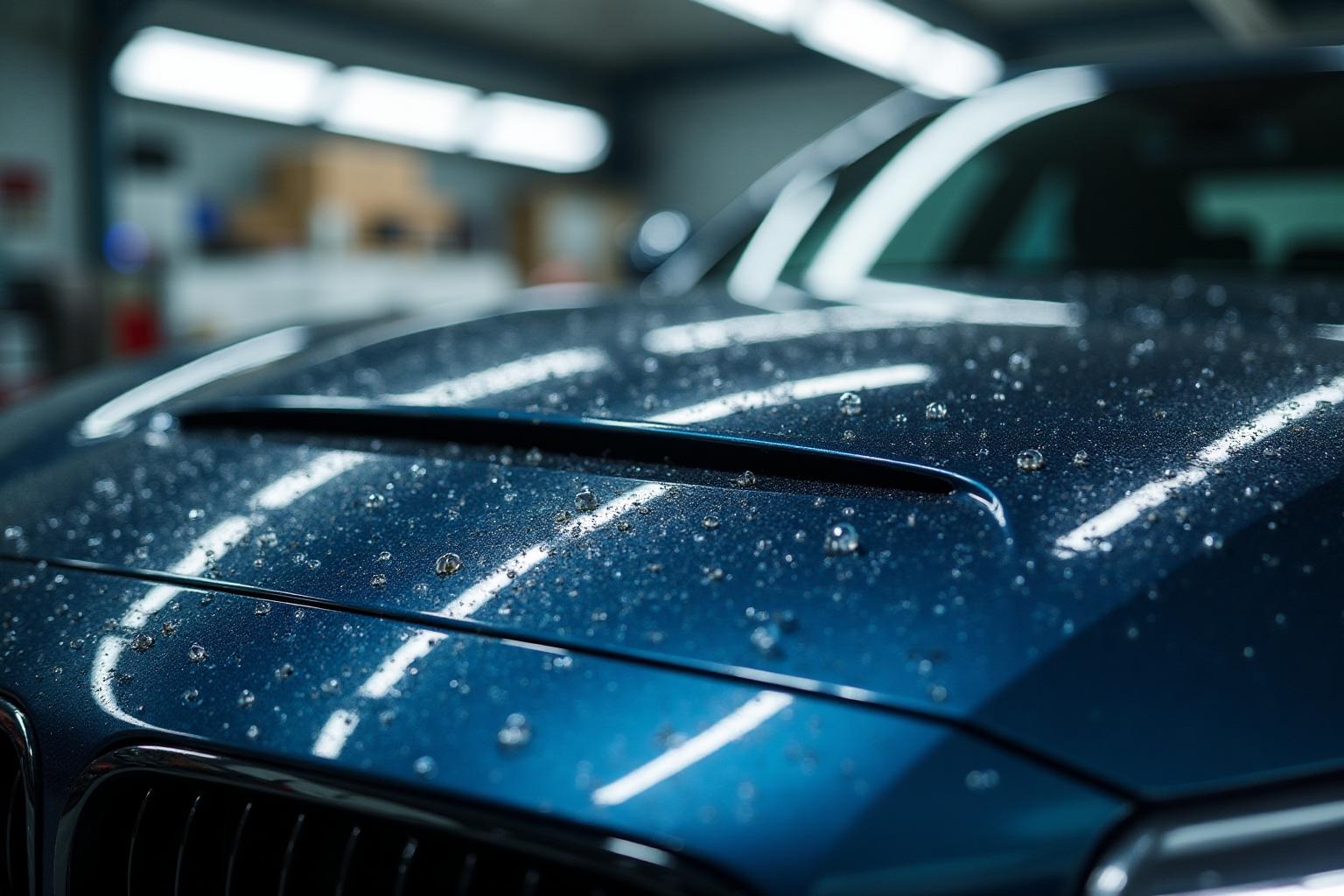
Right after coating application, you should see: Extremely uniform gloss across all panels. No streaks, high spots, or uneven areas. Perfect water beading (nearly spherical droplets). No hazing or cloudiness. Smooth, glass-like finish. Deep, mirror-like paint reflection. If you see streaking, hazing, or inconsistent beading immediately after pickup, application was done poorly.
Long-Term Performance
Over months and years, quality coating maintains: Consistent water beading. Easy cleaning (contaminants wipe off). UV protection (no fading or oxidation). Chemical resistance (no etching from bird droppings). Maintained gloss and depth. Coatings that lose performance within 6-12 months were either low-quality products or poorly applied.
My Final Recommendations for Choosing a Shop
After 6+ years coating vehicles in Scottsdale, here's my straightforward advice for choosing a ceramic coating shop.
Non-Negotiable Requirements
Don't compromise on: Manufacturer certification for specific coating brand. Climate-controlled application facility. Paint thickness measurement and correction expertise. Detailed written quote with all services specified. Physical shop location (not mobile-only). Realistic timelines (minimum 1-2 days). These fundamentals separate professional operations from amateurs cutting corners.
What Justifies Higher Pricing
Pay more for shops offering: Extended warranty duration (5-year vs 1-year). Enhanced paint correction (2-3 step vs 1-step). Premium coating formulations. Extensive experience and portfolio. Additional services (wheels, glass, trim). Detailed documentation and follow-up. Higher cost means better value if these factors deliver tangible benefits.
Questions That Reveal Everything
These specific questions expose shop quality immediately: What exact coating product do you use, and can you show me the technical data sheet? How long have you been certified for this product? Is your facility climate-controlled, and can I see the application bay? How do you determine what paint correction my vehicle needs? Can I see before/after photos of similar vehicles to mine? What's your process if I'm not satisfied with results? Confident, detailed answers indicate expertise. Vague or defensive responses reveal inexperience.
Make an Informed Decision
Choosing a ceramic coating shop in Scottsdale doesn't have to be complicated. Focus on verifiable quality factors—manufacturer certifications, climate-controlled facilities, paint correction expertise, transparent pricing, and established reputation.
Don't let marketing hype, pressure tactics, or low-ball pricing cloud your judgment. Quality ceramic coating requires proper products, skilled application, and controlled conditions. Shops that deliver these fundamentals charge accordingly. Shops that don't deliver subpar results that fail prematurely.
Take time to inspect facilities, verify certifications, check reviews, and compare quotes properly. Ask the specific questions outlined in this guide. Trust shops that provide detailed, confident answers and walk away from those offering vague responses or pressure tactics.
Your vehicle deserves protection applied correctly by certified professionals in proper conditions. Anything less wastes your money and leaves your paint vulnerable to Arizona's brutal environment.
Jeff Sheppard
Owner & Lead Detailing Specialist
With over 15 years of experience in professional auto detailing and ceramic coating applications, Jeff has transformed thousands of vehicles in the Scottsdale area. As the founder of Upscale Detailz, he is certified in multiple ceramic coating systems and passionate about paint care education.