Is Ceramic Coating Worth It? (Honest Opinion)
Wondering if ceramic coating is worth the cost? Get an honest breakdown of protection benefits, time savings, and long-term value from someone who applies ceramic coatings daily.
The Straight Answer: Is Ceramic Coating Worth It?
After applying ceramic coatings to hundreds of vehicles in Scottsdale over 15 years, here's my honest answer: yes, ceramic coating is worth it for most vehicle owners—but not everyone. If you plan to keep your vehicle for 3+ years, care about its appearance, and live in a harsh climate like Arizona, ceramic coating delivers measurable value that exceeds its cost. For detailed cost breakdowns, see our Arizona pricing guide.
If you plan to keep your vehicle for 3+ years, care about its appearance, and live in a harsh climate like Arizona, ceramic coating delivers measurable value that exceeds its cost. You'll save time on maintenance, preserve your paint from Arizona's brutal UV exposure, and protect your resale value.
But if you're leasing short-term, drive a beater car you don't care about, or can't follow basic maintenance guidelines, ceramic coating probably isn't worth the investment.
In this guide, I'll break down exactly when ceramic coating makes financial sense, when it doesn't, and what you're actually getting for your money. No hype, no sales pitch—just facts from someone who lives and breathes this stuff daily.
What Ceramic Coating Actually Does
Before we talk value, let's clarify what ceramic coating actually is. There's massive confusion about this, so let's set the record straight.
Ceramic Coating Is Not Magic Paint Protection
Ceramic coating doesn't make your paint bulletproof. It won't prevent rock chips, stop shopping cart dings, or make deep scratches disappear. Anyone claiming otherwise is lying to you.
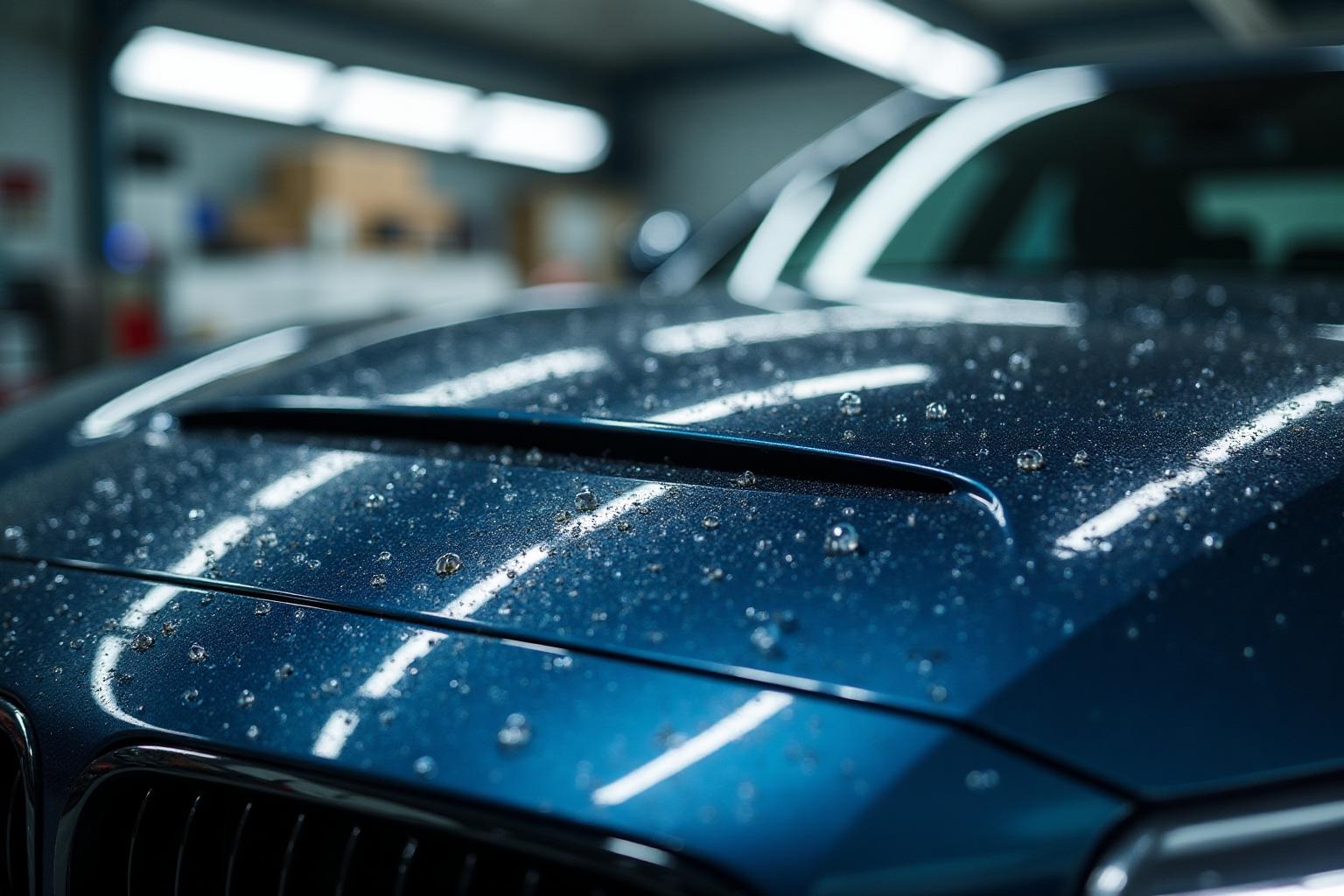
What ceramic coating does do is create a semi-permanent protective layer over your clear coat. This layer is significantly harder than wax or sealant, measurably more resistant to chemicals and UV damage, and dramatically more hydrophobic (water-repelling).
The Real Benefits You Can Measure
Here's what ceramic coating objectively provides: Protection from UV oxidation and fading. Prevention of water spots and mineral etching. Chemical resistance against bird droppings, bug splatter, and tree sap. Enhanced scratch resistance to light contact and washing. Extreme hydrophobic properties that make cleaning faster and easier. Maintained gloss and depth for years instead of months.
These aren't theoretical benefits—they're measurable, observable differences between coated and uncoated vehicles exposed to the same conditions.
The Protection Benefits: Quantifying Real Value
Let's talk about what ceramic coating protection is actually worth in Arizona's harsh environment.
UV Protection and Paint Preservation
Arizona receives some of the most intense UV radiation in the United States. Phoenix averages 299 sunny days annually with summer temperatures regularly exceeding 115°F.
Without protection, automotive clear coat breaks down under this UV assault. You'll see oxidation (that chalky, faded appearance) starting within 2-3 years on vehicles parked outside. By year 5, you're looking at significant paint degradation requiring professional correction or even repainting.
Ceramic coating blocks UV penetration, dramatically slowing oxidation. Vehicles I coated 5+ years ago still maintain deep gloss and color saturation that unprotected vehicles lost years earlier.
The value proposition: A quality respray costs $3,000-6,000 for a sedan, more for larger vehicles. Ceramic coating costs $749-1,799. If coating extends your paint's life by even 2-3 years, it pays for itself.
Chemical Resistance Against Common Contaminants
Bird droppings, bug splatter, and tree sap are acidic. Left on paint, they etch into clear coat, creating permanent damage that requires polishing to remove. In Arizona heat, this etching happens faster—sometimes within hours.
Ceramic coating's chemical resistance prevents contaminants from bonding to paint. They sit on the coating surface instead of etching into clear coat. You still need to remove them promptly, but they won't cause permanent damage as quickly.
I've seen this difference firsthand. Uncoated vehicles develop visible etching patterns from where birds roost. Coated vehicles in the same parking structure show no such damage.
Water Spot and Mineral Deposit Prevention
Arizona has some of the hardest water in the nation. Mineral-heavy water from sprinklers, automatic car washes, or home washing leaves deposits that etch into paint and glass.
Removing established water spots requires aggressive polishing—essentially controlled clear coat removal. Each correction episode removes clear coat permanently. Eventually, you'll polish through to base coat, requiring repainting.
Ceramic coating's extreme hydrophobicity causes water to bead up and roll off immediately. Water doesn't sit long enough to evaporate and deposit minerals. This single benefit saves hundreds of dollars in potential water spot correction over a coating's lifespan.
Enhanced Scratch Resistance
Ceramic coating is significantly harder than wax or clear coat alone. Professional products like System X achieve 9H hardness (the highest rating on the pencil hardness scale).
This doesn't mean your paint becomes scratch-proof. Deep scratches and impacts will still damage coated paint. But light contact—brushing against the car, automated car wash brushes, even improper washing techniques—causes less damage to coated paint than uncoated.
The practical value: Swirl marks and light scratches accumulate over time from normal use. Ceramic coating reduces this accumulation, meaning you need paint correction less frequently. That's $400-800 saved every 2-3 years.
Washing Time Reduction
Ceramic coating's hydrophobic surface means contaminants don't bond strongly to paint. Dirt, dust, and grime sit on the coating surface instead of embedding in microscopic clear coat imperfections.
When you wash, contaminants rinse off with minimal agitation. No scrubbing required. Just spray, gently wipe, rinse. The difference is dramatic.
I've timed this repeatedly: Washing an uncoated sedan typically takes 60-90 minutes to do properly. The same sedan with ceramic coating takes 30-45 minutes. That's 30-60 minutes saved per wash.
If you wash every two weeks (26 times annually), ceramic coating saves 13-26 hours per year. Over 5 years, that's 65-130 hours saved. What's your time worth? At even $20/hour, that's $1,300-2,600 in time value—more than ceramic coating costs.
Reduced Washing Frequency
Ceramic-coated vehicles also stay cleaner longer. The same hydrophobic properties that make washing easier prevent dirt and dust from accumulating as quickly.
In practical terms, coated vehicles need washing every 2-3 weeks to maintain appearance versus weekly for uncoated vehicles in Arizona's dusty environment.
Fewer washes means less time spent, less water used, and reduced risk of wash-induced scratching. This compounds the time savings benefit.
No More Waxing
Traditional paint protection requires waxing every 2-3 months. Each waxing session takes 1-2 hours of application time plus curing.
Ceramic coating eliminates waxing completely for 3-5 years minimum. That's 20-40 hours saved over the coating's lifespan—hours you can spend driving your vehicle instead of maintaining it.
The Five-Year Cost Analysis: Ceramic Coating vs Traditional Maintenance
Let's do actual math comparing ceramic coating to traditional paint maintenance over five years. These numbers are based on real Arizona conditions and typical owner behavior.
Traditional Maintenance Costs
Here's what maintaining a vehicle without ceramic coating costs over 5 years in Arizona: Year 1: Full detail with paint correction to remove initial oxidation and swirl marks: $600. Quarterly waxing (4 times at 2 hours each, value at $25/hour): $200. Year 2: Mid-year paint correction for accumulated damage: $400. Quarterly waxing: $200. Year 3: Full paint correction for UV oxidation and water spot removal: $800. Quarterly waxing: $200. Year 4: Mid-year correction: $400. Quarterly waxing: $200. Year 5: Major correction or partial respray for severe oxidation: $1,200. Quarterly waxing: $200.
Five-year total: $4,400 in professional services. This doesn't include the 40+ hours you've spent waxing (another $1,000+ in time value).
Ceramic Coating Costs
Here's the ceramic coating alternative: Upfront investment: 1-step correction + 5-year coating: $1,175. OR 2-step correction + 5-year coating: $1,799 (for vehicles needing extensive correction). Annual maintenance inspections (optional but recommended): $150/year = $750 over 5 years. Ceramic boost treatments (optional, every 18-24 months): $100 each = $200-300 over 5 years.
Five-year total: $2,125-2,849. That's $1,551-2,275 saved versus traditional maintenance. And you've saved 40+ hours of waxing time.
The math is clear: ceramic coating costs less long-term while delivering superior protection.
Resale Value Impact: The Often-Overlooked Benefit
Let's talk about something most ceramic coating discussions ignore: resale value impact.
Paint Condition Dramatically Affects Resale
In Arizona's used car market, paint condition significantly influences vehicle value. I've watched this play out hundreds of times.
Two identical vehicles—same year, make, model, mileage, trim—will have drastically different values if one has excellent paint and the other shows oxidation, fading, or water spot damage.
The difference? Typically $1,000-3,000 for sedans, more for trucks and luxury vehicles. Buyers notice paint condition immediately. It's often the deciding factor between comparable vehicles.
Ceramic Coating Preserves Showroom Appearance
Vehicles with ceramic coating maintain that fresh-off-the-lot appearance far longer than uncoated vehicles. After 3-5 years, coated vehicles still show deep gloss, vibrant color, and contamination-free surfaces.
This preserved appearance directly translates to higher resale values. We've had customers report that dealerships offered more for their trade-ins specifically because paint condition was exceptional. Private buyers consistently pay premium for vehicles with documented ceramic coating.
Conservative estimate: Ceramic coating adds $500-1,500 to your vehicle's resale value by preserving paint appearance. This alone covers 25-85% of the coating's cost.
Documented Protection as a Selling Point
Having documentation that your vehicle has professional ceramic coating is a selling point. It signals to buyers that you've taken care of the vehicle, invested in its preservation, and maintained it properly.
This perceived care extends beyond paint—buyers assume (often correctly) that an owner who invested in ceramic coating probably maintained other aspects of the vehicle well too.
When selling, we recommend emphasizing ceramic coating in your listing. It differentiates your vehicle from the dozens of identical models and justifies asking premium pricing.
Who Should Get Ceramic Coating
At Upscale Detailz, we've been providing professional ceramic coating in Scottsdale for over 6 years. We use System X ceramic coating with multi-stage paint correction, and we provide honest, realistic expectations. If you're ready to protect your vehicle's paint for years to come, contact us today.
Long-Term Vehicle Owners
If you plan to keep your vehicle 3+ years, ceramic coating makes financial sense. The longer you own, the more value you extract from the protection and time savings.
Five to ten-year ownership? Ceramic coating is almost certainly worth it. You'll recoup costs through avoided correction work and preserved resale value, while enjoying easier maintenance for years.
Vehicles Parked Outside
If your vehicle sits outside—whether at home, work, or both—it faces maximum UV exposure, temperature cycling, and environmental contamination. Ceramic coating protection is most valuable for these vehicles.
Arizona UV is particularly brutal. Vehicles parked outside without protection show visible oxidation within 2-3 years. Ceramic coating is essentially mandatory for long-term paint preservation in these conditions.
Detail-Oriented Owners
If you care about your vehicle's appearance and regularly wash/maintain it, ceramic coating enhances your efforts. The time savings and superior results make maintenance more enjoyable and less time-consuming.
You're already investing time in vehicle care. Ceramic coating makes that investment more effective and rewarding.
High-Value Vehicles
Luxury, exotic, or collector vehicles where paint condition significantly impacts value should absolutely have ceramic coating. The protection and preserved appearance justify the cost multiple times over.
A $1,799 coating on a $75,000 vehicle is cheap insurance against depreciation from paint degradation.
Arizona Vehicle Owners
If you live in Arizona—or any high-UV, high-heat environment—ceramic coating delivers outsized value. The harsh conditions that make paint protection challenging are exactly why ceramic coating is worth it.
Vehicles in Phoenix without protection deteriorate faster than vehicles almost anywhere else in the country. Ceramic coating levels the playing field.
Who Should Wait on Ceramic Coating
Ceramic coating isn't always the right choice. Here's when you should reconsider or delay.
Short-Term Leases
If you're leasing for 2 years or less, ceramic coating's long-term benefits don't fully materialize. You won't keep the vehicle long enough to realize maximum value.
Exception: If you live in Arizona and your lease includes exterior condition clauses, ceramic coating might prevent costly end-of-lease paint corrections. Discuss with your dealer.
Vehicles You Don't Care About
Be honest: if you don't care about your vehicle's appearance, don't get ceramic coating. There's no shame in driving a beater car—but there's no point spending $749-1,799 on protection you won't appreciate.
Save your money for the next vehicle you do care about.
Owners Who Won't Follow Maintenance Guidelines
Ceramic coating isn't maintenance-free. While easier to maintain than uncoated paint, it still requires proper care: pH-neutral wash products (no dish soap or harsh chemicals). Regular washing (every 2-3 weeks minimum). Avoiding automatic car washes with harsh brushes. Prompt removal of bird droppings and tree sap.
If you can't or won't follow these basic guidelines, ceramic coating won't perform as expected. The warranty requires proper maintenance—neglect voids coverage.
Don't invest in ceramic coating if you're not willing to maintain it properly. You'll be disappointed with results and blame the coating instead of maintenance neglect.
Severely Damaged Paint
If your paint is severely oxidized, deeply scratched, or damaged beyond what paint correction can address, you might need repainting first. Ceramic coating goes over existing paint—if that paint is ruined, coating won't fix it.
We'll honestly tell you during assessment if your paint requires repainting instead of coating. While disappointing, it saves you from coating over damaged paint and being unhappy with results.
Tight Budget Situations
If $749-1,799 is a financial hardship, don't stretch to afford ceramic coating. While it delivers value long-term, it's not an emergency. Take care of essential maintenance first (tires, brakes, fluids), then consider ceramic coating when financially comfortable.
Vehicle safety and reliability trump appearance protection every time.
Arizona Heat Protection Value: Why Ceramic Coating Matters Here
Let's talk specifically about Arizona conditions and why ceramic coating is particularly valuable here.
Extreme UV Exposure
Phoenix ranks among the top U.S. cities for annual UV exposure. We see sun 299 days per year, with UV index regularly reaching 10+ (extreme) from May through September.
This UV exposure destroys clear coat. The polymer bonds in clear coat break down under UV attack, causing oxidation, fading, and eventual failure. In mild climates, this takes 7-10 years. In Arizona, it happens in 3-5 years without protection.
Ceramic coating blocks UV penetration, slowing this degradation significantly. I've seen 8-year-old coated vehicles with better paint condition than 3-year-old uncoated vehicles parked in the same area.
Arizona-specific value: In our climate, ceramic coating potentially doubles your paint's functional lifespan. That's enormous value.
Temperature Extremes and Thermal Cycling
Summer temperatures exceed 115°F regularly. Surface temperatures on black vehicles can reach 180°F+. Winter nights drop below freezing.
This thermal cycling—extreme expansion and contraction—stresses paint and clear coat. Micro-cracks develop, allowing moisture and contaminants to penetrate. These micro-cracks accelerate deterioration.
Ceramic coating provides a flexible but durable barrier that expands and contracts with paint, preventing contaminant penetration while accommodating thermal movement. This is critical in Arizona's temperature extremes.
Hard Water and Mineral Deposits
Arizona's water ranks among the hardest in the nation—Phoenix water contains 200-350 parts per million total dissolved solids, mostly calcium and magnesium.
These minerals etch into unprotected paint and glass, creating permanent spots that require aggressive correction. I remove water spot damage from dozens of uncoated vehicles monthly—damage that wouldn't exist with ceramic coating.
The hydrophobic properties of ceramic coating prevent water from sitting long enough to deposit minerals. Water beads and rolls off immediately. This single benefit prevents hundreds of dollars in potential correction work.
Desert Dust and Monsoon Mud
Arizona's fine desert dust is everywhere. It's abrasive—essentially fine sand particles that cause micro-scratching during washing if not removed carefully.
Monsoon season compounds this. Heavy rains turn accumulated dust into mud that bonds aggressively to paint. Improper removal causes significant scratching.
Ceramic coating's slick surface prevents strong bonding. Dust and mud rinse off more easily with less agitation required. Less agitation means less wash-induced scratching. Over years, this dramatically reduces accumulated paint damage.
The Environmental Toll on Unprotected Vehicles
I've been detailing in Arizona for 15+ years. I've seen what this climate does to unprotected vehicles. It's not pretty.
By year 3, unprotected vehicles show visible oxidation, particularly on horizontal surfaces (hood, roof, trunk). By year 5, the deterioration is severe—chalky appearance, faded color, rough texture from surface contamination.
Vehicles I coated 5-7 years ago still look phenomenal. The difference is night and day. In Arizona's harsh environment, ceramic coating isn't a luxury—it's practical paint preservation.
The Ceramic Coating Pros and Cons: Complete Honest List
Let's lay out everything—good and bad—about ceramic coating so you can make an informed decision.
The Pros
Superior UV protection that prevents oxidation and fading. Chemical resistance against bird droppings, bug splatter, tree sap, and acid rain. Water spot prevention from extreme hydrophobic properties. Enhanced scratch resistance to light contact and improper washing. Time savings on washing and maintenance (30-60 minutes per wash). Eliminated need for waxing for 3-5 years minimum. Maintained gloss and depth that makes your vehicle look newer longer. Easier cleaning with less effort and water usage. Preserved resale value through superior paint condition. Long-term cost savings versus traditional paint maintenance. Professional appearance that enhances pride of ownership. Warranty coverage for peace of mind (when properly maintained).
These benefits are measurable, observable, and backed by real-world performance in harsh Arizona conditions.
The Cons
Significant upfront cost ($749-1,799 for sedans, more for larger vehicles). Not maintenance-free—still requires proper care to perform optimally. Won't prevent rock chips, deep scratches, or impact damage. Requires professional application for best results (DIY coatings don't perform as well). Takes 2-5 days for professional prep and application (you're without your vehicle). Shows imperfections if applied over damaged paint without correction. Can fail prematurely if maintenance guidelines aren't followed. Warranty requires annual inspections and specific maintenance procedures. Difficult to remove if you want to change coatings later. Expensive to fix if application goes wrong (high spots, streaking). Not reversible—you're committed for the coating's lifespan.
These aren't deal-breakers for most people, but they're important to understand before committing.
The Middle Ground: Realistic Expectations
Ceramic coating is excellent paint protection that delivers measurable value—but it's not magic. Set realistic expectations: Your vehicle will still get dirty (just less often and easier to clean). You'll still need to wash it (just faster and with better results). It won't make scratches disappear (but prevents new ones more effectively). Paint won't look perfect if it wasn't corrected properly first. Results depend heavily on application quality and maintenance.
Understand these realities upfront, and you'll be thrilled with ceramic coating. Expect miracles, and you'll be disappointed.
Making the Decision: Is Ceramic Coating Worth It For You?
You've got all the information. Now let's make this practical and personal.
Calculate Your Specific Value Proposition
Answer these questions honestly: How long do you plan to keep your vehicle? (3+ years = strong yes) Where does your vehicle park? (Outside = strong yes, Garaged = moderate yes) How much do you care about appearance? (A lot = yes, Don't care = no) What's your current maintenance routine? (Regular washing = yes, Neglect = no) What's your vehicle worth? (Higher value = stronger yes) Are you in Arizona or similar harsh climate? (Yes = very strong yes)
If you answered favorably to most questions, ceramic coating is almost certainly worth it for you. The math works, the protection delivers, and you'll appreciate the results.
Consider Your Financial Situation
Ceramic coating costs $749-1,799 for sedans at Upscale Detailz. That's real money. But spread over 5 years, it's $150-360 annually—less than most people spend on coffee monthly.
Compare to alternatives: Doing nothing: Paint deteriorates, loses value, requires eventual correction or repainting. Traditional waxing: Costs more long-term ($4,400+ over 5 years) and delivers inferior protection. DIY ceramic coating: Saves money upfront but delivers inconsistent results without proper prep.
Professional ceramic coating is the most cost-effective option for long-term paint preservation in Arizona.
Factor In Your Time Value
Time is money. Ceramic coating saves 13-26 hours annually on washing, plus 40+ hours on waxing over 5 years. That's 105-170 hours over 5 years.
What's your time worth? At conservative $25/hour, that's $2,625-4,250 in time value—more than ceramic coating costs. Even if you enjoy washing your car, faster, easier washing improves the experience.
Weigh the Intangibles
Numbers tell part of the story. But consider intangibles: Pride in how your vehicle looks. Confidence that paint is protected. Reduced stress about environmental damage. Enjoyment of easier maintenance. Peace of mind from warranty coverage. Satisfaction of making a smart long-term investment.
These matter. A vehicle you're proud to drive is worth more than pure financial calculation suggests.
Final Thoughts: The Honest Recommendation
After 15 years applying ceramic coatings to hundreds of Arizona vehicles, here's my unfiltered recommendation: For most vehicle owners in Arizona planning to keep their vehicles 3+ years, ceramic coating is absolutely worth it. The protection, time savings, and preserved resale value exceed the cost—especially in our brutal climate.
The math works: $749-1,799 upfront saves $1,551-2,275+ in traditional maintenance over 5 years, preserves $500-1,500 in resale value, and saves 105-170 hours of your time. That's compelling value by any measure.
But ceramic coating isn't for everyone. If you're leasing short-term, don't care about appearance, or won't maintain it properly, skip it. No judgment—just save your money for something you'll value.
If you're on the fence, here's my suggestion: Get an assessment. We'll inspect your paint, explain exactly what work it needs, provide honest pricing, and answer all your questions. No pressure, no upsells—just professional advice so you can make the right decision for your situation.
Your vehicle faces some of the harshest conditions in the country here in Arizona. Ceramic coating is proven protection that works. The question isn't whether ceramic coating delivers value—it does. The question is whether that value matters to you.
If it does, we'd be honored to earn your business at Upscale Detailz. If you need more time to decide, that's fine too. We're here when you're ready.
Jeff Sheppard
Owner & Lead Detailing Specialist
With over 15 years of experience in professional auto detailing and ceramic coating applications, Jeff has transformed thousands of vehicles in the Scottsdale area. As the founder of Upscale Detailz, he is certified in multiple ceramic coating systems and passionate about paint care education.