How to Tell if Your Ceramic Coating Needs Reapplication
Learn the telltale signs that your ceramic coating is degrading and needs reapplication. Expert guidance on inspecting, testing, and deciding when it's time to refresh your protection.
Ceramic coating can last 5-9 years with proper maintenance, but how do you know when it's time to reapply? After applying ceramic coatings for 6+ years in Arizona's harsh climate, I've identified seven clear signs that your coating needs attention. Make sure you're following proper maintenance and avoiding common mistakes that shorten lifespan.
Sign #1: Water No Longer Beads
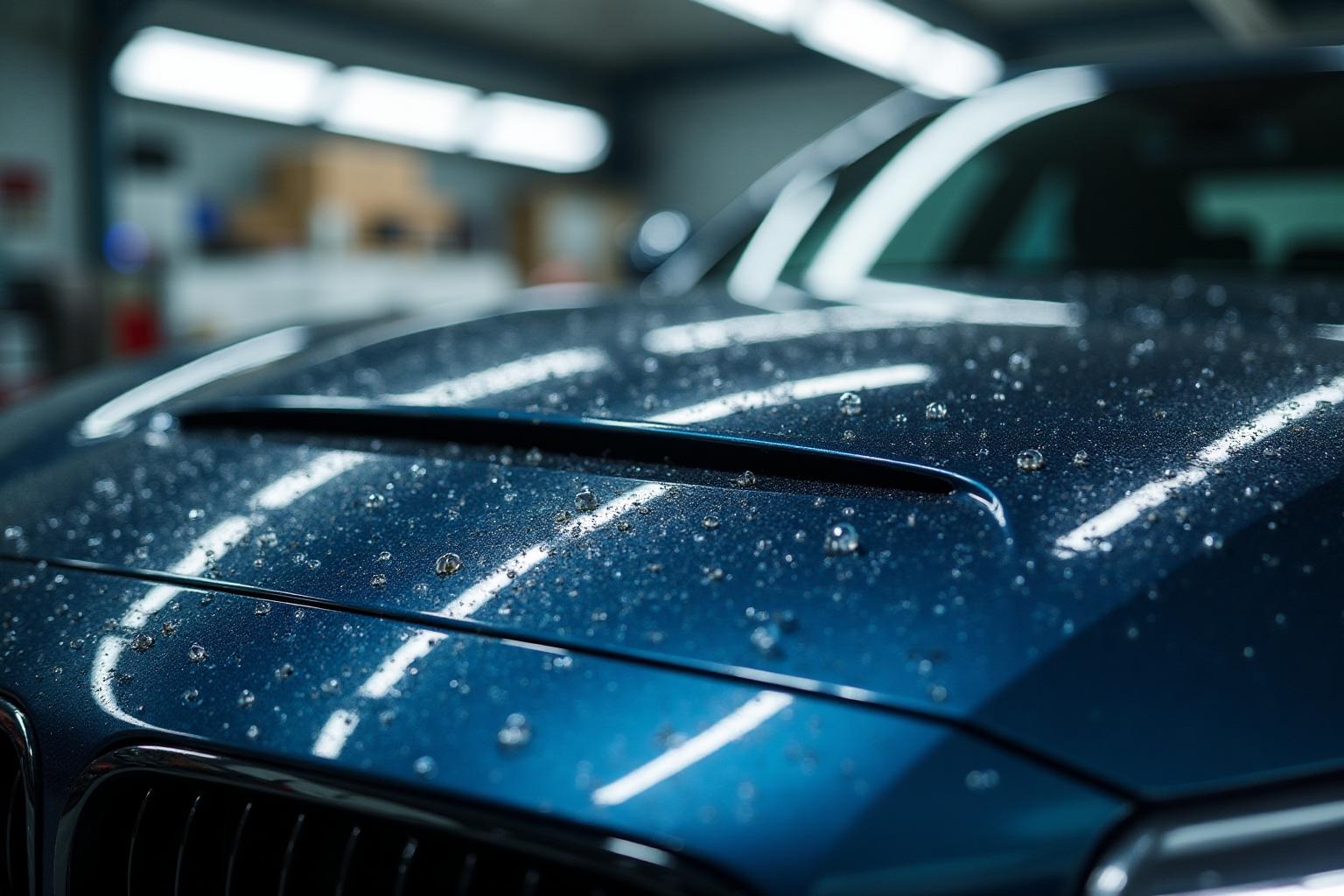
The most obvious sign is when water stops beading into tight spheres. Fresh ceramic coating creates a contact angle exceeding 110 degrees—water forms tight beads and rolls off effortlessly.
As the coating degrades, the hydrophobic properties diminish. Water starts sheeting instead of beading, then eventually sits flat on the surface like uncoated paint.
If you notice water behavior has changed significantly, your coating's hydrophobic layer is compromised.
Sign #2: Water Spots Etch Into the Surface
A functioning ceramic coating allows water spots to sit on top of the coating surface. They're annoying but removable with proper cleaning products.
When water spots start etching—meaning they can't be removed with a water spot remover or light compound—the coating has worn through. The minerals are now bonding with your clear coat, not the coating.
In Arizona, hard water contains high mineral content. If spots are permanently etching despite immediate removal attempts, your coating is likely gone.
Sign #3: Contaminants Stick More Easily
Ceramic coating's slick surface prevents contaminants like bug splatter, bird droppings, tree sap, and road tar from bonding strongly.
If you notice these contaminants are harder to remove than they used to be—requiring more agitation or stronger chemicals—the coating surface has degraded.
Fresh ceramic coating: contaminants rinse off easily. Degraded coating: you're scrubbing and using stronger products.
Sign #4: Visible Swirl Marks or Scratches Appear
Ceramic coating provides scratch resistance (not scratch-proof, but resistant). If you start seeing swirl marks or fine scratches appearing from normal washing, the coating's sacrificial layer has worn away.
This typically happens in high-contact areas first: door handles, trunk edges, around fuel doors, and hood edges.
Once swirls appear, the coating is no longer protecting those areas effectively.
Sign #5: The Paint Feels Rough Instead of Smooth
Run your hand over your paint after washing. Fresh ceramic coating feels glass-smooth—almost slippery.
As coating degrades, you'll feel roughness or texture. This indicates bonded contaminants (iron particles, industrial fallout, brake dust) are embedding into the surface instead of sitting on top.
If a clay bar treatment improves smoothness temporarily but roughness returns quickly, the coating's protective barrier is failing.
Sign #6: Fading or Dull Appearance
Ceramic coating enhances gloss and depth, making colors pop. If your vehicle's paint looks dull, flat, or less vibrant than it did after coating, the UV protection and gloss enhancement are wearing off.
This is especially noticeable on red and black vehicles, which are most susceptible to UV damage.
In Arizona's intense sun, once UV protection fails, oxidation begins. You'll notice the difference in glossiness within months.
Sign #7: It's Been 5-7 Years
Even with perfect maintenance, ceramic coatings eventually degrade. Professional coatings last 5-9 years, but most perform best for 5-7 years.
At the 5-year mark, schedule an inspection. Even if the coating still shows some beading, its protective properties (UV resistance, chemical resistance, scratch resistance) may have significantly diminished.
Think of it like sunscreen that's technically still on your skin but no longer protecting effectively.
What to Do When You Notice These Signs
Not every sign means full reapplication is needed. Here's what to do:
Minor degradation (water beading slightly less, minor contamination sticking): Try professional decontamination and ceramic boost spray. Sometimes a deep clean and booster restore performance.
Moderate degradation (water sheets instead of beads, some areas show spots): Consider a coating top-up or refresh. Some shops offer this service, reapplying a thin layer over the existing coating after thorough decontamination.
Severe degradation (most signs present, coating clearly failing): Full reapplication is necessary. This requires removing the old coating (if still present), paint correction, and fresh coating application.
The Arizona Factor: Coatings Degrade Faster Here
Arizona's climate accelerates ceramic coating degradation. Intense UV exposure (330+ days of sun), extreme heat (120°F+ in summer), hard water with high mineral content, and dust/dirt storms all stress the coating.
A coating rated for 7 years in moderate climates might last 5-6 years in Arizona. Plan accordingly.
Don't Wait Until It's Gone
The biggest mistake is waiting until all signs are present. By then, your paint has been unprotected for months (or longer), and UV damage, oxidation, or etching may have occurred.
Schedule an inspection at year 4-5. A professional can assess coating thickness and condition, then recommend whether you need decontamination, boost, refresh, or reapplication.
At Upscale Detailz, we offer coating inspections for existing customers. If you're in Scottsdale and unsure about your coating's condition, bring it in. We'll honestly assess whether it needs attention or if it's still performing well. Learn more in our ceramic coating resource hub.
Jeff Sheppard
Owner & Lead Detailing Specialist
With over 15 years of experience in professional auto detailing and ceramic coating applications, Jeff has transformed thousands of vehicles in the Scottsdale area. Certified in multiple ceramic coating systems and passionate about paint care education.