Ceramic Coating vs PPF vs Wax: Which Is Best?
Confused about ceramic coating, PPF, wax, graphene, or sealants? Professional detailer breaks down every paint protection method to help you choose the right one for your needs and budget.
The Paint Protection Confusion: What You're Really Choosing Between
Ceramic coating, PPF, and wax all protect paint differently. After years applying all three in Scottsdale, I can break down exactly what each offers, what they cost, and which is best for your situation. See detailed comparisons: ceramic coating vs PPF or ceramic coating vs wax. Ready to protect your paint? View our ceramic coating packages.
After 15 years protecting vehicles in Arizona's brutal climate, I've applied every paint protection method available. I've seen what works, what fails, and what's pure marketing hype. In this comprehensive comparison, I'll break down exactly how each protection method performs, what it costs, how long it lasts, and—most importantly—which option makes sense for your specific needs.
Here's what we're comparing: Ceramic Coating, Paint Protection Film (PPF), Traditional Wax, Graphene Coating, Teflon Coating, Paint Sealant.
No brand favoritism. No sales pitch. Just honest professional analysis so you can make an informed decision about protecting your investment.
Understanding the Fundamentals: How Paint Protection Works
Before comparing specific products, understanding the basic categories of paint protection helps clarify what each option actually does.
Chemical Protectants (Coatings)
Ceramic coating, graphene coating, Teflon coating, wax, and sealants fall into this category. They work by applying a chemical layer over your clear coat that bonds (permanently or temporarily) to create a protective barrier.
These protectants defend against: UV oxidation and fading, Water spots and mineral etching, Chemical contamination (bird droppings, bug splatter, tree sap), Light scratches and swirl marks, Environmental pollutants.
What they don't prevent: Rock chips from road debris, Deep scratches or key damage, Door dings and impact damage, Significant abrasion.
Physical Barriers (Films)
Paint Protection Film (PPF) is a physical urethane barrier applied over paint. Unlike chemical coatings that bond with clear coat, PPF sits on top of paint as a sacrificial layer.
PPF excels at preventing: Rock chips and road debris damage, Significant scratches and abrasions, Impact damage from debris, UV damage (to the film itself, which protects paint underneath).
What PPF doesn't prevent as well: Water spots on the film surface (unless coated), Some types of chemical staining, Yellowing over time (quality-dependent).
Ceramic Coating: The Modern Standard
Let's start with ceramic coating—the protection method we use exclusively at Upscale Detailz and what most professionals recommend as the best value for most customers.
What Ceramic Coating Actually Is
Ceramic coating is a liquid polymer containing silicon dioxide (SiO2) that chemically bonds with your vehicle's clear coat. Once cured, it forms a semi-permanent protective layer that's significantly harder, more hydrophobic, and more chemical-resistant than wax or sealants.
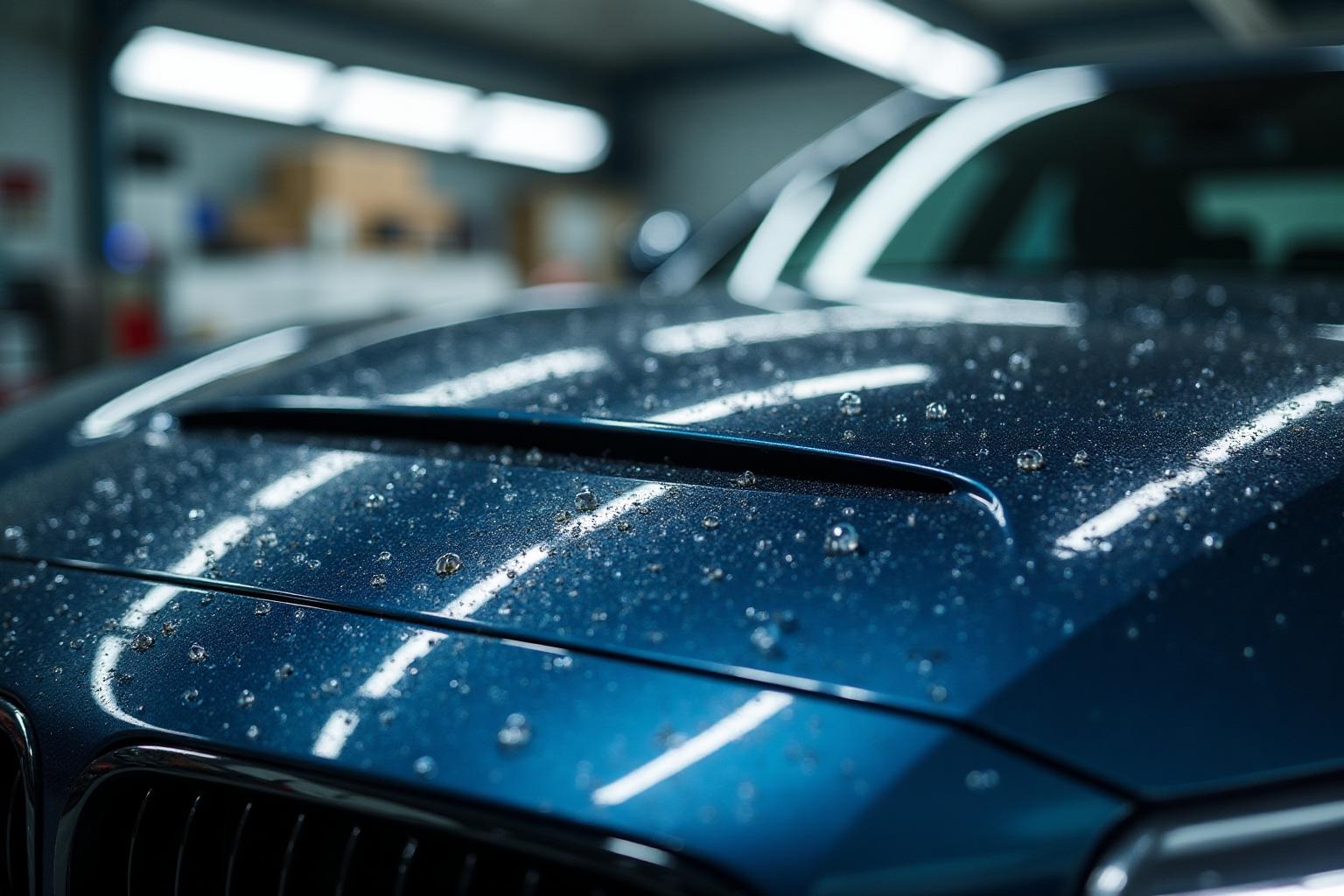
Professional ceramic coatings like System X achieve 9H hardness (pencil hardness scale), create extreme water-repelling surfaces (contact angle exceeding 110 degrees), and last 3-10 years depending on product and maintenance.
Ceramic Coating Protection Benefits
What ceramic coating does exceptionally well: UV Protection: Blocks UV rays that cause oxidation and fading. Critical in Arizona where sun exposure is extreme. Chemical Resistance: Bird droppings, bug splatter, and tree sap sit on the coating surface without etching into paint. Water Spot Prevention: Extreme hydrophobicity causes water to bead and roll off before minerals can deposit. Enhanced Gloss: Creates deep, wet-look finish that makes paint appear richer and more dimensional. Scratch Resistance: 9H hardness provides meaningful protection against light contact and wash-induced marring. Easy Maintenance: Hydrophobic surface means dirt doesn't bond strongly—washing takes 40-60% less time. Long-Term Durability: Properly maintained ceramic coating lasts 5-10 years versus weeks or months for traditional protection.
Ceramic Coating Limitations
What ceramic coating doesn't do: Won't prevent rock chips or significant impact damage. Won't make scratches disappear—coating goes over existing paint condition. Won't eliminate need for washing (just makes it dramatically easier). Requires proper maintenance to perform optimally—not zero-maintenance. Expensive upfront compared to wax ($749-1,799 for professional application). Permanent—can't easily remove once applied if you change your mind.
Ceramic Coating Cost and Value
At Upscale Detailz, professional ceramic coating ranges from $749 (1-step correction + 1-year coating) to $1,799 (2-step correction + 5-year coating). This includes paint correction, proper preparation, and professional application.
Value analysis over 5 years: Traditional wax/sealant maintenance costs $4,400+ in professional services and products. Ceramic coating costs $1,175-1,799 one time plus minimal maintenance. Savings: $2,600-3,200 over 5 years, plus 105-170 hours of time saved.
Paint Protection Film (PPF): The Ultimate Physical Barrier
PPF represents the highest level of physical protection available for automotive paint. It's also the most expensive option.
What PPF Actually Is
Paint Protection Film is a clear, thermoplastic urethane film applied directly over painted surfaces. Modern PPF is optically clear, self-healing (minor scratches disappear with heat), and virtually invisible when professionally installed.
PPF comes in various coverage options: Full front end (hood, fenders, bumper, mirrors): Most common. Full vehicle wrap: Maximum protection, highest cost. High-impact areas only (front bumper, hood leading edge, door edges): Budget-friendly option.
PPF Protection Benefits
What PPF does better than any other option: Rock Chip Prevention: This is PPF's primary advantage. The thick urethane film absorbs impact from road debris that would chip unprotected paint. Deep Scratch Protection: PPF handles significant abrasion that would damage ceramic coating or wax. Self-Healing Properties: Minor scratches and swirl marks disappear when exposed to heat (sun or hot water). Impact Absorption: Door dings and minor impacts damage the film instead of paint. Stain Resistance: Quality PPF resists staining from bugs, tar, and contaminants. Paint Preservation: Underneath PPF, paint remains in original condition—valuable for collectible or high-end vehicles.
PPF Limitations
What PPF doesn't do or does poorly: Extremely Expensive: Full front PPF costs $1,500-3,000. Full vehicle wrap costs $6,000-10,000+. Visible Edges: Even perfect installation has seams and edges that are noticeable up close. Yellowing Over Time: Lower-quality PPF yellows within 3-5 years. Premium films resist better but still eventually discolor. Water Spotting: PPF surface isn't as hydrophobic as ceramic coating—water spots more easily without ceramic coating on top. Installation Quality Critical: Poor installation creates bubbles, lifting edges, and contamination under film. Complex Removal: Removing old PPF is labor-intensive and expensive. Maintenance Required: PPF still needs regular washing and protection to prevent staining and degradation.
PPF Cost and Value
PPF pricing for typical sedan: Front clip (hood, fenders, bumper, mirrors): $1,800-2,500. Full front end plus rocker panels and door edges: $2,500-4,000. Full vehicle wrap: $6,000-10,000+.
Value proposition: PPF makes sense if: You drive on chip-prone roads regularly (gravel, construction zones, highway). You own a high-value vehicle where rock chip repair costs are significant. You plan to keep the vehicle long-term and want pristine paint underneath. You're willing to invest significantly for maximum physical protection.
PPF may not make sense if: You're on a tight budget—ceramic coating delivers better value for most drivers. You don't drive on chip-prone roads frequently. You trade vehicles every 3-4 years—won't fully realize PPF's value. You prioritize easy maintenance over maximum protection.
Traditional Wax: The Old Standard
Car wax has protected vehicles for decades. It's cheap, widely available, and easy to apply. It's also dramatically inferior to modern protection methods.
What Wax Actually Is
Traditional car wax is a natural (carnauba) or synthetic product that sits on top of clear coat, providing temporary protection and gloss enhancement. Wax doesn't bond chemically with paint—it simply adheres to the surface until washing removes it.
Wax Protection Benefits
What wax does well: Inexpensive: $15-50 per application for DIY products. Easy Application: Most people can wax their own vehicle with basic supplies. Immediate Gloss: Fresh wax creates attractive shine and depth. No Professional Installation Required: DIY-friendly for budget-conscious owners. Removable: Don't like the result? Wash it off and try something else.
Wax Limitations
What wax doesn't do or does poorly: Extremely Short Durability: Lasts 4-12 weeks maximum before requiring reapplication. Minimal Protection: Wax provides limited defense against UV, chemicals, or scratches. No Hardness: Wax is soft—offers essentially zero scratch resistance. Poor Hydrophobicity: Water beading diminishes within weeks. High Maintenance: Requires reapplication every 1-3 months for continuous protection. Labor Intensive: Each wax application takes 1-2 hours. Time Consuming Long-Term: 15-25 hours annually spent waxing. Inconsistent Results: DIY application quality varies significantly.
Wax Cost and Value
Wax appears cheap initially: $20-40 per bottle covers 5-10 applications. But over 5 years: 20-40 applications needed (assuming quarterly waxing). Cost: $100-400 in product alone. Labor: 40-80 hours of application time. Professional waxing: $100-200 per application = $2,000-4,000 over 5 years.
Value proposition: Wax makes sense if: You have extremely tight budget and can't afford ceramic coating. You enjoy the ritual of waxing your vehicle regularly. You plan to sell/trade very soon (within 6 months) and just need temporary enhancement.
Wax doesn't make sense if: You value your time—ceramic coating saves 100+ hours over 5 years. You want meaningful protection—wax provides minimal actual defense. You live in harsh climate—wax fails rapidly in Arizona conditions.
Graphene Coating: Marketing Hype or Real Improvement?
Graphene coating burst onto the scene in recent years claiming to be the 'next generation' beyond ceramic coating. Is it legitimate innovation or clever marketing?
What Graphene Coating Actually Is
Graphene coating is essentially ceramic coating (silicon dioxide base) with added graphene oxide particles. Graphene is a single layer of carbon atoms arranged in a hexagonal lattice—one of the strongest materials known to science in lab conditions.
The theory: Adding graphene to ceramic coating should enhance strength, flexibility, thermal conductivity, and hydrophobic properties beyond standard ceramic coatings.
Graphene Coating Claims vs Reality
Marketing claims about graphene coatings: Significantly harder and more scratch-resistant than ceramic. Better heat dissipation properties. Superior water beading and self-cleaning. Enhanced gloss and depth. Longer durability.
Reality after testing graphene coatings: Marginal improvements at best—typically 5-10% better water behavior. No meaningful difference in scratch resistance compared to quality ceramic coatings like System X. Heat dissipation claims are theoretical—no observable benefit on vehicles. Gloss is comparable to high-end ceramic coatings, not dramatically better. Durability is similar to equivalent-tier ceramic coatings. Significantly more expensive than comparable ceramic coatings.
Professional Assessment of Graphene Coatings
After testing multiple graphene coatings in Arizona conditions: Performance is good—comparable to premium ceramic coatings. Performance is not significantly better than System X or other top-tier ceramic coatings. Price premium (typically 20-40% more than ceramic) isn't justified by minimal performance gains. Marketing emphasizes 'graphene' as revolutionary, but improvements are incremental at best.
The graphene in these coatings exists in such small quantities that its theoretical benefits don't materialize in real-world automotive applications. You're essentially paying extra for a buzzword.
Graphene Coating Value Proposition
Graphene coating makes sense if: You want cutting-edge technology regardless of cost-benefit analysis. You've already tried top-tier ceramic coatings and want marginal improvement. You don't mind paying 20-40% premium for 5-10% performance gain.
Graphene coating doesn't make sense if: You're value-conscious—quality ceramic coating delivers 95% of the performance at 30-40% less cost. You want proven long-term durability—ceramic coatings have decade+ track records; graphene is still relatively new. You're skeptical of marketing claims—and you should be.
Teflon Coating: Outdated Technology
Teflon coating was popular 10-15 years ago before ceramic coatings became widely available. It's still offered by some detailers, but it's essentially obsolete technology.
What Teflon Coating Actually Is
Teflon coating for cars uses PTFE (polytetrafluoroethylene)—the same material that makes cookware non-stick. When applied to automotive paint, it creates a slippery, water-repelling surface.
Teflon coating is a polymer sealant—more advanced than wax but significantly less durable and protective than ceramic coating.
Teflon Coating Performance
What Teflon coating does: Creates hydrophobic surface (though not as extreme as ceramic). Provides some protection against UV and chemical contamination. Enhances gloss temporarily. Costs less than ceramic coating ($200-600 typically).
What Teflon coating doesn't do well: Short Durability: Lasts 3-6 months maximum—requires frequent reapplication like wax. Minimal Hardness: Provides essentially no scratch resistance. Inferior Hydrophobicity: Water beading diminishes rapidly compared to ceramic coating. Weak Chemical Resistance: Acidic contaminants still damage paint underneath relatively quickly. No Long-Term Value: Reapplication costs accumulate rapidly.
Teflon Coating Value Proposition
Teflon coating made sense 15 years ago when ceramic coating wasn't widely available. Today, it's an inferior middle option that costs more than wax but delivers far less value than ceramic coating.
Teflon coating makes sense if: Literally no scenario where I'd recommend Teflon over ceramic coating in 2025.
Teflon coating doesn't make sense if: You want lasting protection—ceramic coating lasts 10x longer for 2-3x the cost. You value modern technology—ceramic coating is objectively superior in every measurable way. You can afford $749+ for ceramic coating—which almost everyone considering $200-600 Teflon can.
Paint Sealant: The Middle Ground
Paint sealants are synthetic polymer-based protectants that sit between wax and ceramic coating in terms of durability and protection.
What Paint Sealant Actually Is
Paint sealants are synthetic (typically polymer-based) products designed to bond more strongly to clear coat than wax while remaining removable and reapplicable. They're essentially advanced wax with better chemistry.
Sealants are what most professional detailers used before ceramic coatings became the standard.
Paint Sealant Performance
What sealants do well: Moderate Durability: Lasts 3-6 months—better than wax, far less than ceramic. Reasonable Protection: Better UV and chemical resistance than wax. Good Hydrophobicity: Creates nice water beading when fresh. Easier Application: Simpler than ceramic coating, quicker than waxing. Affordable: $200-400 for professional application, $30-80 for DIY products.
What sealants don't do well: Still requires frequent reapplication every 3-6 months. Minimal scratch resistance—only marginally better than wax. Hydrophobicity diminishes within weeks. Not significantly cheaper than entry-level ceramic coating over time. Obsolete technology—ceramic coating does everything better.
Paint Sealant Value Proposition
Paint sealant made sense 10 years ago as the best available protection before affordable ceramic coatings existed. Today, it's a legacy product with limited justification.
Sealant makes sense if: You're applying it yourself and already own the product. You're maintaining a vehicle temporarily before selling (next 6 months).
Sealant doesn't make sense if: You're paying for professional application—ceramic coating is better value. You want long-term protection—ceramic coating lasts 10-20x longer. You're buying new sealant product—spend slightly more on ceramic coating instead.
The Combination Option: PPF + Ceramic Coating
Many high-end vehicle owners choose both PPF and ceramic coating for maximum protection. This combination delivers the benefits of both systems.
How PPF + Ceramic Coating Works
Ceramic coating is applied over PPF after film installation and curing. This combination provides: Physical protection from PPF against rock chips and deep scratches. Chemical and UV protection from ceramic coating. Enhanced hydrophobicity on PPF surface (prevents water spotting). Easier maintenance—contaminants don't bond to ceramic-coated PPF. Extended PPF lifespan—ceramic coating protects film from UV degradation and staining.
PPF + Ceramic Coating Cost
Combined pricing: Front clip PPF + ceramic coating on entire vehicle: $2,500-3,500. Full vehicle PPF + ceramic coating: $7,000-12,000+.
This represents maximum investment in paint protection—only makes sense for high-value vehicles, collectors, or enthusiasts who want absolute best protection regardless of cost.
The Comparison Chart: Side-by-Side Analysis
Here's how every protection method compares across key factors relevant to most vehicle owners.
Durability Comparison
Wax: 4-12 weeks. Teflon Coating: 3-6 months. Paint Sealant: 3-6 months. Graphene Coating: 3-7 years. Ceramic Coating: 3-10 years. PPF: 5-10 years (yellows earlier on low-quality films).
Winner: Ceramic Coating and PPF tie for longevity. Ceramic coating requires less maintenance to maintain performance.
Protection Level Comparison
UV Protection: Ceramic/Graphene (excellent), PPF (excellent), Sealant/Teflon (good), Wax (fair). Chemical Resistance: Ceramic/Graphene (excellent), PPF (very good), Sealant/Teflon (good), Wax (fair). Scratch Resistance: PPF (excellent), Ceramic/Graphene (very good), All others (minimal). Rock Chip Prevention: PPF (excellent), All others (none). Water Spot Prevention: Ceramic/Graphene (excellent), PPF with ceramic coating (excellent), Sealant/Teflon (good), Wax/uncoated PPF (fair).
Winner: PPF for physical protection, Ceramic coating for chemical/UV protection, Combination for maximum protection.
Cost Comparison (5-Year Ownership)
DIY Wax: $100-400 product + 40-80 hours labor = $1,100-2,400 total value. Professional Wax: $2,000-4,000. Teflon Coating: $800-2,400 (4-8 reapplications). Paint Sealant: $800-1,600 (4-8 reapplications). Ceramic Coating: $749-1,799 (one-time) + $200-400 maintenance = $949-2,199 total. Graphene Coating: $1,200-2,500 (one-time) + $200-400 maintenance = $1,400-2,900 total. PPF (front clip): $1,800-2,500 (one-time). PPF (full vehicle): $6,000-10,000 (one-time).
Winner: Ceramic coating delivers best value—moderate upfront cost, minimal ongoing expenses, excellent protection for 5-10 years.
Maintenance Requirement Comparison
Wax: Reapply every 1-3 months = high maintenance. Teflon/Sealant: Reapply every 3-6 months = moderate-high maintenance. Graphene Coating: Wash with pH-neutral products, annual inspection = low maintenance. Ceramic Coating: Wash with pH-neutral products, annual inspection = low maintenance. PPF alone: Regular washing, more susceptible to water spots = moderate maintenance. PPF + Ceramic: Regular washing, annual inspection = low maintenance.
Winner: Ceramic coating and graphene coating require minimal ongoing maintenance while maintaining performance.
DIY Feasibility Comparison
Wax: Easy—most people can do this successfully. Sealant: Moderate—requires proper prep and application technique. Teflon Coating: Moderate—similar to sealant. Consumer Ceramic Coating: Difficult—easy to mess up, results inferior to professional. Professional Ceramic Coating: Not recommended—requires training and controlled environment. Graphene Coating: Difficult—same as professional ceramic coating. PPF: Extremely Difficult—professional installation mandatory for acceptable results.
Winner: Wax is most DIY-friendly. But professional ceramic coating delivers dramatically better results than DIY options.
Making Your Decision: Which Protection Method Is Right for You?
Now you understand how each protection method works and compares. Here's practical guidance for choosing the right option for your specific situation.
Choose Ceramic Coating If:
You plan to keep your vehicle 3+ years and want long-term protection. You value your time—ceramic coating saves 100+ hours over 5 years versus waxing. You want excellent protection without extreme cost—best value option. You live in harsh climate (Arizona, Florida, coastal areas) where UV and environmental damage is severe. You park outside where UV exposure is maximum. You want easy maintenance—washing takes 30-50% less time. You care about paint appearance and want showroom gloss for years. Your vehicle is worth $15,000+ where protecting resale value matters.
Ceramic coating is the recommended option for 75% of vehicle owners. It delivers outstanding protection at reasonable cost with minimal maintenance.
Choose PPF If:
You drive on rock chip-prone roads regularly (gravel, highway, construction zones). You own high-value vehicle ($50,000+) where rock chip repair is expensive. You want maximum physical protection regardless of cost. You plan to keep vehicle long-term and want pristine original paint. You're willing to invest $2,000-10,000+ for ultimate protection. You can combine with ceramic coating for maximum defense.
PPF makes sense for specific high-protection scenarios but isn't necessary for most drivers.
Choose Combination (PPF + Ceramic) If:
You own exotic, collectible, or extremely high-value vehicle. You want absolutely maximum protection available regardless of cost. You can afford $3,000-12,000+ investment in paint protection. You plan to keep vehicle indefinitely and want perfect preservation. You're enthusiast who values ultimate quality.
Combination protection represents the pinnacle—only makes sense for serious enthusiasts or high-value vehicles.
Choose Wax If:
You have extremely tight budget under $500 total. You genuinely enjoy waxing and consider it relaxing hobby. You're selling vehicle within 6 months and just need temporary enhancement. You're maintaining older vehicle where protection investment doesn't make sense.
Wax is rarely the optimal choice in 2025 given ceramic coating's superior value—but it's acceptable for very specific budget-constrained scenarios.
Don't Choose:
Teflon Coating: Obsolete technology—ceramic coating is better in every way. Paint Sealant: Legacy product—ceramic coating costs slightly more but lasts 10x longer. Graphene Coating: Marketing hype—20-40% cost premium for minimal performance gain over quality ceramic coating.
The Professional Recommendation: What Makes Sense for Most People
After 15 years protecting vehicles in one of the harshest climates in the United States, here's my honest professional recommendation for most vehicle owners: Choose professional ceramic coating. Specifically, at Upscale Detailz, our most popular package is 1-step paint correction + 3-year ceramic coating for $999 (sedans). This delivers excellent protection at reasonable cost with minimal maintenance.
Why Ceramic Coating Is the Best Choice for Most Drivers
Best Value: Over 5 years, ceramic coating costs less than traditional maintenance while delivering superior protection. Long Durability: One application protects for 3-10 years versus weeks or months for wax/sealant. Time Savings: Saves 100+ hours over 5 years—washing takes 40-60% less time. Excellent Protection: Defends against UV, chemicals, water spots, light scratches—everything except rock chips. Easy Maintenance: Wash with pH-neutral products, annual inspection—that's it. Proven Technology: Decade+ track record of performance—not experimental or hype. Arizona-Tested: We've applied hundreds of ceramic coatings in brutal conditions—performance is proven.
When to Upgrade to PPF
Add PPF to ceramic coating if: You drive 20,000+ miles annually on highways where rock chips are common. You own vehicle worth $50,000+ where paint damage significantly impacts value. You've experienced multiple rock chips on current or previous vehicles. You want maximum possible protection and can afford it.
Most customers don't need PPF—ceramic coating handles 90% of protection needs for typical driving conditions.
What About Budget Constraints?
If ceramic coating seems expensive: Remember: $999 for 3-year protection = $333/year = $28/month. Compare to gym membership, streaming services, coffee—most people spend more on those monthly. Consider entry package: 1-step + 1-year coating for $749 provides excellent protection at lower cost. Think long-term: Traditional maintenance costs $4,400+ over 5 years—ceramic coating is cheaper AND better. Finance option: Many detailers offer payment plans—ask about options.
If you genuinely can't afford ceramic coating: Use quality wax or sealant and reapply every 2-3 months. Save for ceramic coating and apply when financially comfortable. Prioritize essential vehicle maintenance (tires, brakes) first—appearance protection can wait.
The Arizona Factor: Why Protection Matters Here
Living in Arizona makes paint protection more critical and valuable than milder climates. Here's why ceramic coating is especially important here.
UV Exposure
Phoenix receives 299 sunny days annually with extreme UV index 6-12+ for 8 months. Unprotected clear coat oxidizes within 2-3 years. Ceramic coating blocks UV penetration, preventing oxidation and fading for 5-10+ years.
Temperature Extremes
Summer surface temperatures exceed 180°F on dark vehicles. Winter nights drop to freezing. Thermal cycling stresses paint and creates micro-cracks. Ceramic coating provides flexible barrier that protects through extreme temperature swings.
Hard Water
Arizona water contains 200-350 ppm total dissolved solids. Mineral deposits etch into unprotected paint permanently. Ceramic coating's extreme hydrophobicity prevents water from sitting long enough to deposit minerals.
Desert Dust and Monsoon Mud
Fine abrasive dust coats vehicles daily. Monsoon rains create mud that bonds aggressively to paint. Ceramic coating's slick surface prevents strong bonding—contaminants rinse off easily with less wash-induced scratching.
Final Thoughts: Making the Smart Investment
You now understand every major paint protection method available—what they do, what they cost, and which situations they fit. Here's the bottom line: For 75% of vehicle owners, professional ceramic coating is the smartest investment. It delivers outstanding protection at reasonable cost with minimal maintenance. Wax, sealants, and Teflon coating are obsolete technologies—ceramic coating does everything better for similar or lower long-term cost. PPF makes sense for specific high-protection needs but isn't necessary for most drivers. Graphene coating is marketing hype—ceramic coating delivers 95% of performance at 30-40% less cost. Combination PPF + ceramic coating is ultimate protection but only justified for high-value vehicles or serious enthusiasts.
At Upscale Detailz, we chose ceramic coating exclusively because it delivers the best results for our Arizona customers. We've applied hundreds of ceramic coatings over 15 years, and customer satisfaction is consistently outstanding. Vehicles maintain showroom appearance for years, washing is dramatically easier, and long-term cost is less than traditional maintenance.
If you're ready to protect your vehicle properly with professional ceramic coating, we'd be honored to earn your business. We'll assess your paint condition, recommend the appropriate package for your needs and budget, and deliver results that exceed expectations—guaranteed.
Your vehicle faces some of the harshest conditions in the country here in Arizona. Don't leave paint protection to chance with outdated methods. Invest in proven ceramic coating technology and enjoy years of beautiful, protected paint with minimal effort.
Jeff Sheppard
Owner & Lead Detailing Specialist
With over 15 years of experience in professional auto detailing and ceramic coating applications, Jeff has transformed thousands of vehicles in the Scottsdale area. As the founder of Upscale Detailz, he is certified in multiple ceramic coating systems and passionate about paint care education.